
You’ve probably heard that coins with the smallest face value have the highest collector’s value — and there’s some truth to that.
Speaking of one cent, the Indian Head Penny coin, made from 1859 to 1909, stands as one of the most significant pennies worth money in American currency, seeing fifty years of production covering the Civil War, technical changes in metal content, and large changes in production numbers, making some dates extremely rare.
History and Design Features
It was designed by James Barton Longacre, the chief engraver of the US Mint.
The front side shows a figure often mistaken for an Indian princess, actually being Liberty wearing a feather headdress.
The back side first featured a laurel wreath, later changing to an oak wreath with a shield.
Main Periods and Metal Mixes
- 1859 (Type 1): The coin was made from a copper-nickel mix, containing 88% copper and 12% nickel, having a laurel wreath on the back side.
- 1860–1864 (Type 2): The metal mix remained copper-nickel, with the back side changing to an oak wreath with a shield, acting as the standard for most later issues.
- 1864–1909 (Type 3): Lack of nickel during the Civil War and difficulty making the hard copper-nickel mix caused the Mint to switch to bronze (95% copper, 5% tin, and zinc), resulting in these coins having a more reddish color and being easier to produce.
Changes in the metal mix remain a factor in value; copper-nickel coins (1859–1864) in good condition often sell for more than bronze ones, showing a unique look and lower production number, with 1864 being an exception.
Main Indian Head Penny Dates
Some years of Indian Head Penny production show low numbers made or unique features, making them the most expensive and sought-after coins among collectors.
1877
Reason for Rarity: Standing as the rarest issue in the bronze penny series, the coin’s low number produced resulted from demand dropping after the 1873 economic downturn, totaling only 852,500 coins made.
Most coins made were quickly used in circulation, showing heavy wear that you can see and determine with a coins value app.
Value: 1877 coins in any condition cost much money, with uncirculated samples (MS) selling for tens of thousands of dollars, earning the title “King” of the Indian Head series.
1909-S
Reason for Rarity: Serving as the last year of Indian Head Penny production, the San Francisco Mint (S) released a small number of coins, totaling only 309,000 coins made, quickly replacing them with the new Lincoln Penny.
Value: Standing as the second rarest coin in the series, any coin showing the “S” mint mark remains highly valued.
1864 L
Reason for Rarity: The year 1864 marked the switch from the copper-nickel mix to bronze, with a small “L” (the first letter of the engraver Longacre’s last name) on the ribbon of Liberty’s headdress showing on part of the bronze production.
Coins without the “L” letter appear more often.
Value: 1864-L coins sell for more money than regular 1864 bronze coins, especially when in good condition, making it necessary to tell apart the copper-nickel 1864 coins (without L) and the bronze 1864-L coins.
1873 Double Date
Reason for Rarity: A mistake happened in 1873, known as “Double Date” or “Closed 3,” showing the last number “3” in the date made with a double outline on some coins.
An “Open 3” type also exists, appearing more often.
Value: The Double Date type remains a collectible coin, costing significantly more than the standard 1873 issue.
Types and Features for Collectors
Besides the main dates, specific types exist that greatly affect the Indian Head Penny’s price.
Copper-Nickel (1859–1864)
- 1859 (Laurel Wreath): The only year showing the laurel wreath design on the back side.
- 1864 (Copper-Nickel): A transition year, finding these coins made from the copper-nickel mix sells for more than the bronze coins from the same year, showing a lower chance of finding them.
Bronze (1864–1909)
Color Rating: Color remains a main factor deciding the grade and cost for bronze coins starting in 1864, especially for coins not used in circulation.
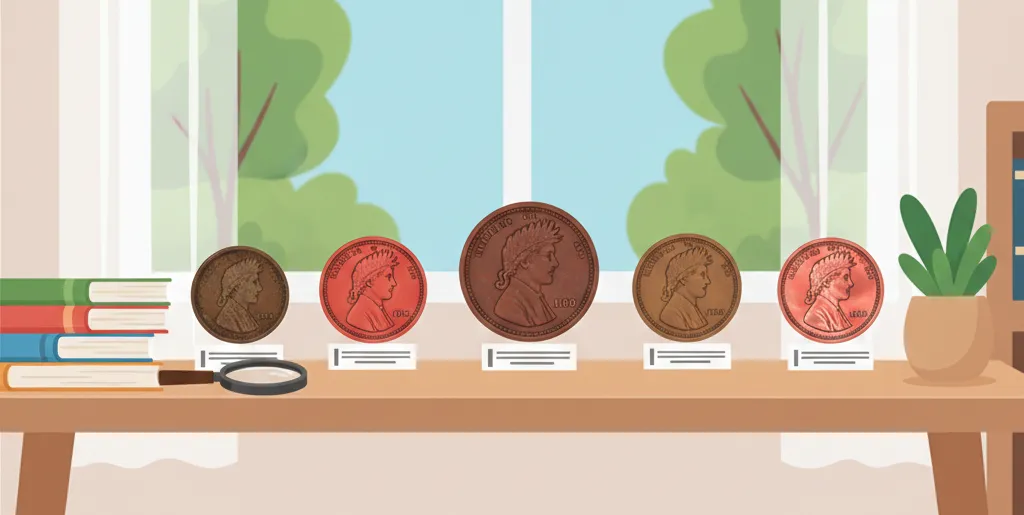
- BN (Brown): The coin appears fully or mostly brown, being the most common color.
- RB (Red-Brown): A mix of red and brown patina, usually keeping 10–90% of the original red color.
- RD (Red): The coin keeps more than 90% of its original, bright red shine; MS coins having the RD mark cost much more than BN coins of the same grade.
Making Mistakes
- Repunched Date (RPM): A mistake showing the date made twice, having a shift in placement.
- Die Breaks: Cracks or tears on the tool (die), leaving visible lines or bumps on the coin.
Factors Affecting Cost
The Indian Head Penny’s cost is decided by combining rarity, production number, grade, and color, and can be easily checked with a coin scanner app.
Rarity and Production Number
A low production number, seen with the 1877 and 1909-S coins, drives the high price, making coins even in poor condition keep significant value.
Grade
As with all collectible coins, the grade using the Sheldon scale (from 1 to 70) greatly affects the price, with a difference of one point (for example, MS-65 versus MS-66) meaning hundreds or thousands of dollars for unusual dates.
Color For Bronze Coins
Color stands as the deciding factor for coins not used in circulation, a 1909 coin in MS-65 RD condition potentially costing five to ten times more than the same coin in MS-65 BN condition.
| Year | Production | Condition G-4 | Condition MS-65 RD |
| 1859 (Nickel) | 36,410,000 | $18 – $35 | $1,500 – $3,000 |
| 1877 (Bronze) | 852,500 | $700 – $1,200 | $15,000 – $35,000+ |
| 1908-S (Bronze) | 3,274,000 | $40 – $60 | $400 – $800 |
| 1909-S (Bronze) | 309,000 | $250 – $450 | $3,000 – $8,000+ |
| 1864 L (Bronze) | Low, part of production | $50 – $100 | $3,000 – $6,000 |
Note: Prices are estimates and may change greatly. G-4 (Good) means a coin with strong signs of use. MS-65 RD means a coin not used in circulation, keeping more than 90% of the original red color.
Advice for Collectors
Collecting the Indian Head Penny may prove exciting and easy to access, knowing what exactly to search for.
- Focus on 1877 and 1909-S, being the most expensive coins, finding they cover the main cost of the entire series.
- Check the “L,” always checking the 1864 coin for the small “L” letter on the headdress ribbon.
- Sort by Color, always rating and looking for coins marked RD for uncirculated coins, showing them to be the most valuable.
- Avoid Cleaning, never cleaning Indian Head coins, removing patina and original shine, resulting in lower collectible value.